

Patients beginning fertility treatment often hear the terms egg quality and embryo quality used almost interchangeably. Although they are closely related, they describe two very different stages of reproduction. Understanding the distinction can help you better interpret your fertility evaluation, ask informed questions during treatment, and gain a clearer picture of what contributes to IVF success.
Simply put, egg quality is one important ingredient, while embryo quality is the result of multiple biological and laboratory factors working together and is a combination of the egg and the sperm. A healthy egg is essential, but it is only one piece of a much larger process involving sperm health, embryo development, advanced laboratory techniques, and individualized medical care.
“One of the most important conversations I have with patients is helping them understand that fertility is rarely determined by a single factor. Our goal is to evaluate every stage of embryo development so we can make the most informed decisions for each individual patient.”
Dr. Minoos Hosseinzadeh, Founder and Medical Director of Fertility Institute of San Diego
What Is Egg Quality?
Egg quality refers to the biological health and developmental potential of an egg before fertilization. In IVF, high-quality eggs are more likely to mature appropriately, fertilize successfully, and support healthy embryo development.
Several characteristics define good egg quality:
- Normal chromosomal composition
- Ability to complete maturation
- Capacity for successful fertilization
- Potential to support early embryo development
Age remains one of the strongest influences on egg quality. As women grow older, the likelihood of chromosomal abnormalities increases while the number of healthy eggs gradually declines. However, age is only one part of the equation.
Other factors affecting egg quality include:
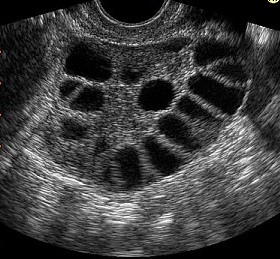
- Ovarian reserve
- Genetics
- Lifestyle habits
- Smoking
- Obesity
- Certain medical conditions
- Previous ovarian surgery
It is also important to distinguish egg quantity from egg quality. A woman may produce many eggs during IVF stimulation, yet only a portion may possess optimal developmental potential. Conversely, someone with diminished ovarian reserve may retrieve fewer eggs while still producing healthy embryos.
What Is Embryo Quality?
Once fertilization occurs, the egg and sperm combine to create an embryo. From this point forward, embryologists carefully monitor how the embryo develops over several days.
Embryo quality reflects how successfully the embryo progresses through early development rather than simply whether fertilization occurred.
Embryologists evaluate factors including:
- Cell division patterns
- Developmental timing
- Blastocyst formation
- Overall structural appearance
Embryo quality is dynamic. It develops over time and cannot be determined immediately after fertilization. An embryo that appears promising on Day 1 may stop developing later, while another may continue progressing into a strong blastocyst suitable for transfer.
Understanding embryo quality explained in this way helps patients appreciate why IVF involves continuous monitoring rather than a single evaluation.
Egg Quality vs. Embryo Quality: What Is the Difference?
Although connected, egg quality vs. embryo quality represents two distinct concepts.
| Egg Quality | Embryo Quality |
|---|---|
| Refers to the health and developmental potential of the egg before fertilization | Refers to how the embryo develops after fertilization |
| Influenced primarily by maternal biology | Influenced by egg, sperm, and laboratory conditions |
| Evaluated before fertilization | Evaluated throughout embryo development |
| Important contributor to IVF success | One of the strongest predictors of implantation potential |
This distinction explains why oes egg quality determine embryo quality is not a simple yes or no question. Egg quality is highly influential, but embryo quality depends on several additional variables.
What Else Influences Embryo Quality?
Understanding what affects embryo quality requires looking beyond the egg itself.
Sperm Quality
Healthy sperm contributes half of the embryo’s genetic material. Poor sperm quality, including elevated DNA fragmentation or chromosomal abnormalities, can influence embryo development even when egg quality is excellent.
Many patients ask, does sperm affect embryo quality? The answer is yes. Male fertility plays an important role in fertilization, embryo development, and overall IVF outcomes.
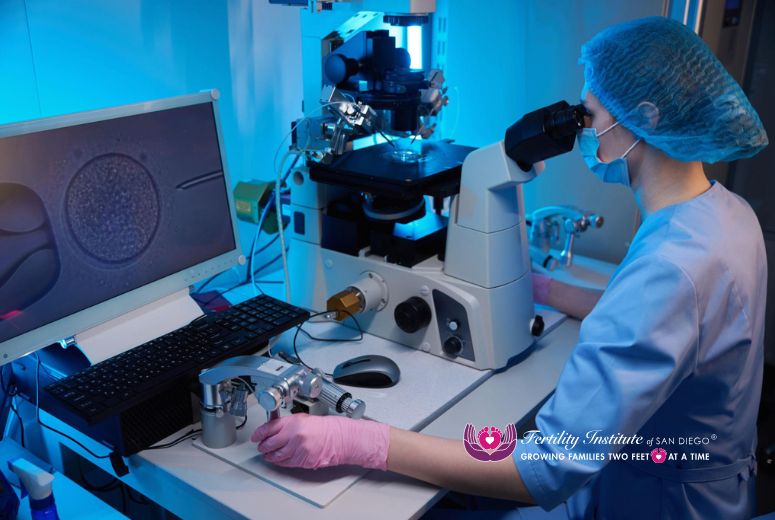
Laboratory Environment
Modern IVF laboratories maintain highly controlled environments designed to support embryo development.
Critical laboratory factors include:
- Stable temperature
- Controlled humidity
- Air filtration
- Specialized culture media
- Experienced embryologists
Small variations in laboratory conditions may influence embryo growth, making laboratory expertise an essential component of successful IVF treatment.
Embryo Development
Embryos naturally follow different developmental pathways. Some divide rapidly, while others progress more slowly before reaching the blastocyst stage.
Biological variation is completely normal, which is why embryo development is assessed continuously rather than at a single moment.
Can Good Eggs Still Produce Lower Quality Embryos?
Yes.
One of the most reassuring facts for patients is that even healthy eggs do not always produce high-quality embryos. Likewise, lower ovarian reserve does not automatically prevent excellent embryo development.
Reasons may include:
- Sperm-related factors
- Chromosomal abnormalities
- Developmental arrest
- Natural biological variation
Similarly, women with diminished ovarian reserve sometimes produce exceptional embryos despite retrieving fewer eggs.
“As reproductive endocrinologists, we evaluate the complete clinical picture rather than focusing on one number or one laboratory result. Individualized treatment planning allows us to identify opportunities that may not be obvious from ovarian reserve or age alone.”
Dr. Hosseinzadeh
How Embryologists Evaluate Embryo Quality
Embryologists traditionally assess embryos using morphology, a visual grading system that evaluates:
- Blastocyst expansion
- Inner cell mass
- Trophectoderm quality
- Overall cellular appearance
While embryo grading provides valuable information, it represents a visual assessment rather than the embryo’s complete developmental history.
How AI Assisted Embryo Monitoring Provides Additional Information
Technology has transformed how embryos are monitored during IVF.
At Fertility Institute of San Diego, every IVF cycle includes EmbryoScope technology with Chloe AI, making it the only fertility clinic in San Diego to provide AI assisted embryo monitoring as part of every IVF treatment cycle.
Rather than observing embryos only at scheduled intervals, EmbryoScope continuously records development using time lapse imaging.
This provides additional information including:
- Continuous embryo monitoring
- Morphokinetic analysis
- Objective developmental data
- Enhanced embryo selection support
Importantly, artificial intelligence supports experienced embryologists. It does not replace their clinical expertise or medical judgment.
Where Does PGT Fit In?
Patients often confuse embryo grading with PGT testing, but they serve different purposes.
Embryo grading evaluates how an embryo appears and develops.
PGT testing evaluates the embryo’s chromosomes.
Both assessments provide valuable information, and neither replaces the other. Together, they contribute to a more comprehensive understanding of embryo potential.
Why Donor Eggs Improve One Important Variable
For some patients, donor egg IVF offers an opportunity to improve one significant factor: egg quality.
Egg donors are typically young, healthy women with favorable ovarian function. Younger eggs generally have higher rates of chromosomal normality, which may improve embryo development.
However, donor eggs do not guarantee high-quality embryos.
Embryo quality continues to depend on:
- Sperm quality
- Embryo development
- Laboratory conditions
- Individual biological variation
This balanced perspective helps patients maintain realistic expectations throughout treatment.
IVF Success Depends on the Whole Picture
Successful IVF is rarely determined by a single variable.
Instead, physicians evaluate the interaction of multiple factors, including:
- Egg quality
- Sperm quality
- Embryo quality
- Uterine environment
- Laboratory excellence
- Physician expertise
- Personalized treatment planning
This comprehensive approach forms the foundation of Precision IVF at Fertility Institute of San Diego, where every treatment plan is individualized to maximize each patient’s opportunity for success.
Understanding the Difference Helps You Make More Informed Decisions
Understanding egg quality vs. embryo quality allows patients to participate more confidently in their fertility journey. While egg quality is an important starting point, embryo quality reflects a much broader biological process involving both partners, advanced embryology, and personalized medical care.
At Fertility Institute of San Diego, every stage of embryo development is carefully evaluated using advanced laboratory technology, experienced embryologists, and physician-led care from Dr. Minoos Hosseinzadeh. By considering the complete picture rather than a single measurement, patients receive individualized recommendations designed to support informed decisions and optimize IVF outcomes.
If you’re ready to start your fertility journey, please book a complimentary virtual consultation with Dr. Hosseinzadeh to discuss your fertility options or any reproductive healthcare questions.