


Turning 40 does not create a biological switch that suddenly makes pregnancy impossible. But fertility after 40 is different, and the differences become increasingly important with each passing year.
For women considering getting pregnant after 40, the most useful question is not simply, “Am I too old?” It is: What is my reproductive potential now, and which options make sense for my age, ovarian reserve, medical history, and family-building goals?
Age influences egg quantity, egg quality, embryo chromosomal competence, conception probability, and miscarriage risk. Yet two women of the same age can still have very different fertility profiles.
At Fertility Institute of San Diego, Dr. Minoos Hosseinzadeh evaluates these factors together to develop a personalized treatment strategy rather than relying on age alone.
“For women over 40, time matters, but our goal is not to create fear around age. Our goal is to understand each patient’s reproductive biology as quickly and thoroughly as possible so we can discuss realistic options.”
Dr. Minoos Hosseinzadeh, Founder and Medical Director, Fertility Institute of San Diego
How Does Fertility Change After Age 40?
Female fertility changes through two interconnected processes: declining egg quantity and declining egg quality.
Women are born with a finite number of eggs. As ovarian reserve decreases, fewer eggs may be available for recruitment during a menstrual cycle or IVF stimulation.
Age also affects the probability that an egg will produce a chromosomally competent embryo. As maternal age increases, aneuploidy, meaning an abnormal number of chromosomes, becomes more common. This contributes to lower conception and live-birth probabilities and increasing miscarriage risk.
According to the American Society for Reproductive Medicine, relative fertility at age 40 is approximately half that of women in their late 20s and early 30s.
Suggested infographic: “What Changes With Fertility After 40?”
Age increases → ovarian reserve generally decreases → proportion of chromosomally abnormal eggs increases → fewer viable embryos may be available → conception probability decreases and miscarriage risk increases.
Fertility at 40, 42 and 45 Is Not the Same Conversation
“Over 40” should not be treated as one homogeneous fertility category.
Fertility at 40
Natural conception can still occur at 40, but monthly fecundability is lower than at younger ages. For someone actively trying to conceive, an early fertility evaluation can provide useful information rather than spending many months waiting.
Fertility at 42
By 42, both ovarian reserve and age-related changes in egg quality become increasingly consequential. IVF after 40 may still involve a patient’s own eggs, but expected ovarian response, previous pregnancies, AMH, antral follicle count, and prior treatment response become important components of counseling.
Fertility at 45
At 45, spontaneous conception and successful IVF with one’s own eggs become considerably less likely. Treatment discussions may therefore expand to include donor egg IVF and other family-building pathways.
These age distinctions are important because chronological age and ovarian reserve interact, but they do not measure the same biological phenomenon.
AMH After 40 Does Not Tell the Whole Story
One of the most common misconceptions surrounding fertility after 40 concerns anti-Müllerian hormone, or AMH.
AMH is primarily a marker of ovarian reserve and anticipated response to ovarian stimulation. It is not a direct test of egg quality and cannot independently determine whether someone can become pregnant.
The distinction is critical:
Ovarian reserve = primarily information about egg quantity
Age = a major factor associated with egg quality and chromosomal competence
ASRM specifically advises that ovarian reserve testing should supplement, rather than replace, counseling based on age and diagnosis. AMH and antral follicle count are useful for estimating ovarian response, but they are much weaker predictors of reproductive potential independently of age.
A reassuring AMH result at 41, therefore, should not be interpreted as meaning reproductive potential is equivalent to that of a substantially younger woman.
Suggested comparison graphic: “AMH vs. Age: What Each Tells Us”
AMH and AFC
Primarily help estimate ovarian reserve and potential response to stimulation.
Age
Provides important context regarding egg quality, embryo chromosomal competence, miscarriage risk, and reproductive probability.
What Fertility Testing Should Women Over 40 Consider?
For women over 40, ASRM notes that more immediate fertility evaluation and treatment may be warranted rather than waiting the traditional 6 or 12 months.
A fertility evaluation may include:
- AMH testing
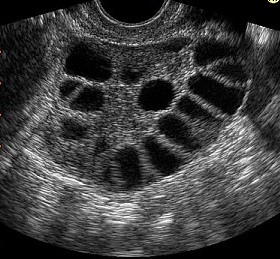
- Antral follicle count through ultrasound
- FSH and estradiol when appropriate
- Evaluation of ovulation and menstrual history
- Assessment of the uterus and fallopian tubes when indicated
- Review of previous pregnancies and miscarriages
- Semen analysis when applicable
- Review of medical, genetic, and reproductive history
The objective is not simply to produce a fertility “score.” It is to establish a clinically meaningful picture of reproductive potential and identify which fertility treatment options deserve consideration.
What Fertility Treatment Options Are Available After 40?
Trying Naturally
Yes, you can get pregnant naturally after 40. The probability per cycle, however, is lower than during earlier reproductive years.
Because reproductive time becomes increasingly consequential after 40, seeking specialist guidance early can help prevent unnecessary delays.
IUI
Intrauterine insemination may be appropriate for selected patients, depending on ovarian reserve, sperm parameters, tubal status, ovulation, age, and diagnosis.
For some women over 40, however, the comparatively limited time available may make moving toward IVF a more appropriate discussion.
IVF With Your Own Eggs After 40
IVF after 40 can provide more information and therapeutic opportunities than timed intercourse or IUI because eggs are retrieved, fertilized, and embryos undergo Preimplantation Genetic Testing for Aneuploidy (PGT-A). PGT-A tests all 23 pairs of chromosomes in the embryos thereby obviating the risk of transferring genetically abnormal (aneuploid) embryos. When a genetically normal (euploid) embryo is transferred, not only pregnancy rates are increased but miscarriage rates and risk of genetic abnormalities in the offspring are significantly decreased.
Whether IVF with your own eggs is reasonable depends on factors including age, ovarian reserve, anticipated egg yield, previous IVF response, reproductive history, and personal goals.
There is no universal number of eggs required for IVF after 40. The clinically relevant question is how many mature eggs can realistically be retrieved and how many embryos ultimately demonstrate developmental and chromosomal competence.
Precision IVF and Embryo Assessment After 40
When embryo numbers are limited, having detailed information about embryo development can become particularly valuable.
Fertility Institute of San Diego offers Precision IVF, integrating EmbryoScope time-lapse monitoring with Chloe AI-assisted embryo assessment. FISD is currently the only IVF clinic in San Diego offering Chloe AI together with EmbryoScope technology.
Rather than evaluating embryos solely through periodic snapshots, time-lapse technology provides continuous developmental information while embryos remain within the controlled culture environment.
“Precision IVF allows us to observe embryo development as a continuous story, not a snapshot. With AI-assisted analysis, we gain deeper insight while maintaining a gentle, uninterrupted environment for embryos to thrive.”
Dr. Minoos Hosseinzadeh, Founder and Medical Director, Fertility Institute of San Diego
Importantly, AI-assisted assessment does not reverse age-related changes in egg quality or create chromosomally normal embryos. Instead, it provides additional developmental information that can support individualized embryo assessment and clinical decision-making.
Suggested infographic: “Precision IVF After 40”
Egg retrieval → fertilization → EmbryoScope continuous monitoring → developmental data → Chloe AI-assisted assessment →PGT-A (Preimplantation Genetic Testing for Aneuploidy→ physician and embryology review → individualized embryo selection decisions.
PGT-A for Women Over 40
Preimplantation genetic testing for aneuploidy, or PGT-A, evaluates biopsied embryos for chromosomal abnormalities before transfer.
Because embryo aneuploidy becomes more common with maternal age, PGT-A may enter treatment discussions for some women over 40. It is not automatically appropriate for every patient, particularly when very few embryos are available.
When Are Donor Eggs Considered After 40?
Donor egg IVF may be discussed when the probability of achieving pregnancy with one’s own eggs becomes very low, ovarian response is repeatedly poor, previous IVF cycles have been unsuccessful, or a patient prefers a pathway with different expected probabilities.
One important biological distinction is that outcomes with donor eggs are influenced substantially by the age and characteristics of the egg donor rather than primarily by the intended mother’s age.
Considering donor eggs is a deeply personal decision. It should be discussed transparently alongside the realistic prospects of treatment using one’s own eggs.
Frequently Asked Questions About Fertility After 40
Can I still get pregnant at 40?
Yes. Natural pregnancy after 40 remains possible, although fertility is lower and miscarriage risk is higher compared with younger reproductive ages.
Should I see a fertility specialist immediately after 40?
If you are over 40 and actively considering pregnancy, prompt evaluation is reasonable. ASRM states that more immediate evaluation and treatment may be warranted for women over 40.
Does a good AMH mean my egg quality is good?
No. AMH primarily provides information about ovarian reserve and anticipated ovarian response. Age remains a more important predictor of reproductive success than ovarian reserve alone.
Can IVF work with my own eggs after 40?
Yes, for selected patients. The realistic probability varies substantially according to age, ovarian reserve, previous response, embryo development, diagnosis, and other individual factors.
Does PGT-A improve IVF success after 40?
PGT-A may provide useful chromosomal information for selected patients. By allowing us to select euploid embryos, it increases implantation rates and decreases miscarriage rates. It does not improve the underlying quality of an embryo.
Can donor eggs improve the chance of pregnancy after 40?
Donor eggs can provide a different probability profile because outcomes are strongly influenced by donor age and egg characteristics rather than the intended parent’s age alone.
Your Age Is Important, But It Is Not Your Entire Fertility Story
Fertility after 40 requires realism, but realism should not be confused with pessimism.
Age provides essential biological context. Ovarian reserve helps estimate egg quantity and potential response. Medical and reproductive history add another layer. Together, these factors help determine whether trying naturally, IUI, IVF with your own eggs and PGT-A, donor eggs, or another family-building pathway deserves consideration.
At Fertility Institute of San Diego, patients receive individualized care directly from Dr. Minoos Hosseinzadeh throughout their fertility journey. The objective is to understand your reproductive biology, discuss the probabilities transparently, and develop a treatment strategy appropriate for you.
If you’re over 40 and considering pregnancy, an individualized fertility evaluation can help you understand your ovarian reserve, reproductive health, and available treatment options without losing valuable time.
If you’re ready to start your fertility journey, please book a complimentary virtual consultation with Dr. Hosseinzadeh to go over fertility options or any other reproductive healthcare questions.