

A failed embryo transfer can be one of the most difficult moments in an IVF journey. You may have followed every instruction, reached the blastocyst stage, prepared the endometrial lining carefully and transferred an embryo that appeared promising, only to receive a negative pregnancy test.
The natural question is: Why did my embryo transfer fail?
The answer is rarely as simple as identifying one cause. Embryo implantation is a complex biological process involving the embryo, the endometrium, hormonal preparation, the uterine environment and other individual clinical factors. A failed embryo transfer is therefore an outcome that requires context, not a diagnosis by itself.
“After an unsuccessful transfer, our goal is not to assume that something went wrong. We carefully review the entire cycle and determine whether there is information that should influence the next step,”
Dr. Minoos Hosseinzadeh
What Does a Failed Embryo Transfer Mean?
During embryo implantation, a developing blastocyst interacts with the endometrium, the specialized tissue lining the uterus. Successful implantation depends on intricate biological communication between the embryo and the maternal environment.
When an embryo transfer does not result in pregnancy, patients may encounter terms such as failed IVF implantation or embryo implantation failure. These terms can be used differently across clinical and research settings, which is another reason an unsuccessful transfer should be interpreted within the context of the individual treatment history.
Even when an IVF cycle and embryo transfer proceed as planned, implantation is not guaranteed.
This distinction is particularly important because patients searching for answers after IVF failure may quickly encounter the term “recurrent implantation failure.” A single failed embryo transfer does not automatically establish that diagnosis.
Why Can a Good-Quality Embryo Still Fail to Implant?
Embryo quality is one of the first considerations after a failed embryo transfer, but “good quality” requires context.
Embryologists traditionally assess embryos according to morphologic characteristics, including developmental stage and appearance. Morphology provides valuable information, but it cannot reveal every aspect of an embryo’s underlying biology.
An embryo that receives a favorable morphologic grade can therefore still have biological characteristics that affect its developmental potential.
Chromosomal status is another consideration. Aneuploidy, meaning an abnormal number of chromosomes, can affect an embryo’s ability to establish a sustained pregnancy. Preimplantation genetic testing for aneuploidy, or PGT-A, may provide information about chromosomal status when clinically appropriate.
However, even the transfer of an embryo identified as euploid does not guarantee implantation, an ongoing pregnancy or live birth.
“Embryo grading and genetic testing can give us valuable information, but neither allows us to predict implantation with absolute certainty,”
“Human reproduction still involves biological variables that no single test can completely measure.”
Dr. Hosseinzadeh
Can Uterine Problems Cause Implantation Failure?
The uterine environment is another component a fertility specialist may review following failed IVF implantation.
Depending on a patient’s medical history and previous evaluation, a reproductive endocrinologist may consider whether abnormalities within or affecting the uterine cavity could be clinically relevant.
These may include:
- Endometrial polyps
- Certain fibroids
- Intrauterine adhesions
- Congenital or acquired uterine abnormalities
- Hydrosalpinx in appropriate clinical circumstances
The endometrial lining may also be reviewed, including how it developed during preparation for embryo transfer.
Finding that an embryo did not implant does not mean a uterine abnormality is necessarily present. Additional fertility testing should be individualized according to the patient’s history rather than ordered automatically after every failed embryo transfer.
Can Progesterone Timing Affect a Frozen Embryo Transfer?
Progesterone plays an important role in preparing the endometrium for embryo implantation.
In programmed frozen embryo transfer cycles, the duration and adequacy of progesterone exposure may be clinically relevant. A fertility specialist may therefore review the hormonal preparation protocol, medication administration and timing of progesterone in relation to the embryo transfer.
The objective is to assess whether endometrial preparation and embryo transfer timing were appropriately coordinated.
This does not mean progesterone is responsible for every failed frozen embryo transfer. It is one element of a broader clinical review.
What Does a Fertility Specialist Review After a Failed Embryo Transfer?
Rather than immediately ordering every available test, a comprehensive review can help determine what information is actually relevant.
After a failed embryo transfer, Dr. Hosseinzadeh may review:
- Embryo factors: Embryo development, blastocyst grading, developmental history, available IVF laboratory information and PGT-A results when testing was performed.
- Uterine factors: Previous imaging and whether further assessment of the uterine cavity is clinically indicated.
- Endometrial preparation: Endometrial development and the medication protocol used before transfer.
- Progesterone exposure: The route, timing and duration of progesterone when relevant to the treatment protocol.
- Transfer procedure: Technical information from the embryo transfer itself.
- Broader reproductive history: Age, previous IVF cycles, prior embryo transfers, pregnancy history, recurrent pregnancy loss, endometriosis and other relevant medical or fertility diagnoses.
The purpose of testing after failed embryo transfer should be to answer a meaningful clinical question, not simply to generate more test results.
Does One Failed Embryo Transfer Mean You Have an Implantation Problem?
No. One failed embryo transfer does not, by itself, establish recurrent implantation failure.
The significance of an unsuccessful transfer depends on the individual clinical context. Factors such as age, the number and characteristics of embryos transferred, whether PGT-A was performed, previous IVF treatment and reproductive history can all influence how a failed transfer is interpreted.
For some patients, proceeding with another embryo transfer may be reasonable. For others, additional investigation may be appropriate before another attempt.
This distinction can help prevent patients from assuming that one unsuccessful transfer means their uterus cannot support implantation or that something was necessarily missed during treatment.
Do You Need More Testing Before Your Next Transfer?
Not necessarily.
Patients researching what to do after failed embryo transfer frequently encounter information about immune testing, endometrial receptivity testing, anticoagulants, corticosteroids and other proposed investigations or interventions.
Whether any of these approaches is appropriate depends on the patient’s individual clinical circumstances. Some are not recommended for routine use because evidence of benefit remains insufficient or uncertain for broad groups of IVF patients.
More testing is not automatically better care.
“Testing should have a reason behind it,”
“We want to understand whether a result could meaningfully change how we approach the next treatment cycle.”
Dr. Hosseinzadeh
An individualized approach allows the fertility specialist to determine whether further investigation is warranted based on the patient’s treatment history rather than ordering every available test simply because one transfer was unsuccessful.
Precision IVF and a More Detailed View of Embryo Development
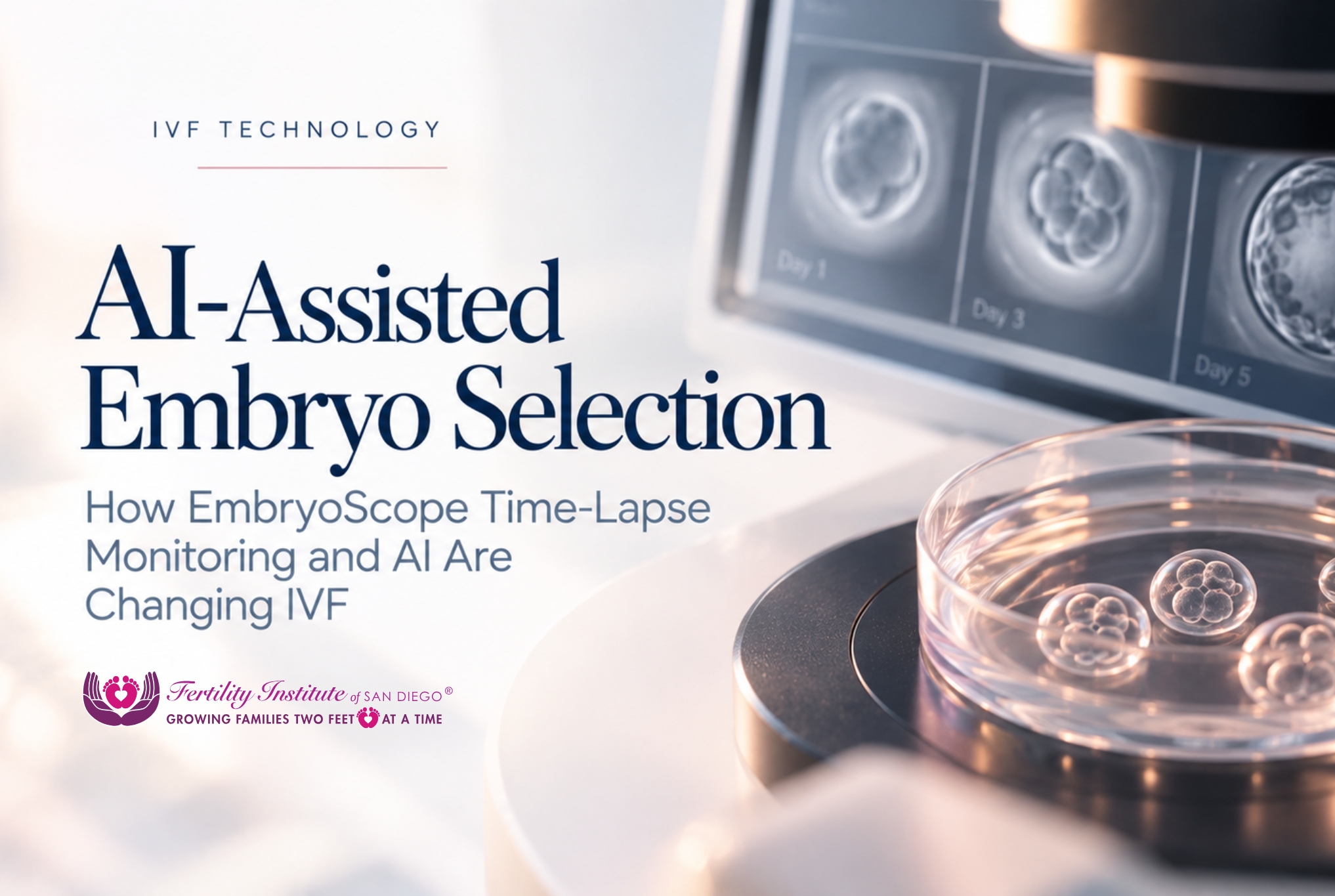
At Fertility Institute of San Diego, embryo evaluation can include information gathered through EmbryoScope time-lapse monitoring as part of the clinic’s Precision IVF approach.
Rather than relying exclusively on isolated observations, time-lapse monitoring allows embryo development to be observed longitudinally within the IVF laboratory environment.
AI-assisted embryo assessment with Chloe AI provides additional information that may support embryo evaluation alongside the clinical and embryologic information considered by the treatment team.
This distinction is important. AI-assisted embryo assessment cannot guarantee implantation, predict every biological variable or eliminate the possibility of IVF failure.
Instead, it provides another layer of developmental information that can be considered alongside embryo morphology, genetic testing when performed, reproductive history and other clinical findings.
What Happens After a Failed Embryo Transfer?
An unsuccessful transfer does not automatically mean the same IVF protocol should be repeated, nor does it mean the entire treatment plan needs to change.
The appropriate next step depends on what can be learned from the previous cycle.
Questions worth discussing with your fertility specialist may include:
- What did we learn about embryo development?
- Was the uterine cavity adequately evaluated?
- How did the endometrial lining respond?
- Should hormonal preparation or progesterone exposure be reviewed?
- Was there anything notable about the embryo transfer procedure?
- Would additional testing meaningfully change the next treatment plan?
- Is another embryo transfer appropriate without further investigation?
For patients seeking a second opinion after failed IVF in San Diego, reviewing previous treatment records, embryo information and transfer-cycle details can help establish which findings are relevant before deciding how to proceed.
At Fertility Institute of San Diego in La Jolla, patients receive individualized, one-on-one reproductive care with Dr. Hosseinzadeh throughout their fertility treatment.
Frequently Asked Questions
Why did my embryo transfer fail?
There may not be one identifiable reason. Embryo biology, chromosomal status, the uterine environment, endometrial preparation, transfer-related factors and individual reproductive history may all influence implantation.
Why did a good-quality embryo fail to implant?
Morphologic grading evaluates how an embryo develops and appears, but appearance cannot reveal every aspect of its biological potential. A favorably graded embryo therefore does not guarantee implantation.
Why can a euploid embryo fail to implant?
PGT-A provides information about chromosome copy number in the cells sampled from an embryo. Chromosomal status, however, is only one component of reproductive biology. A euploid result does not guarantee implantation or live birth.
Does one failed embryo transfer mean something is wrong?
Not necessarily. A single unsuccessful transfer can occur even when treatment has proceeded appropriately. Your individual treatment history provides important context for deciding whether further evaluation is warranted.
Should I have more testing after one failed embryo transfer?
Not everyone requires additional testing after a single failed transfer. The decision depends on factors including age, embryo history, previous treatment, uterine evaluation and broader medical and reproductive history.
How soon can I try another embryo transfer?
Timing varies according to the type of IVF cycle, your medical circumstances and the treatment plan being considered. Your fertility specialist can determine whether another transfer can proceed relatively soon or whether additional evaluation should occur first.
Moving Forward After a Failed Embryo Transfer
A failed embryo transfer can create an understandable desire to find a definitive explanation. In many cases, however, the most useful next step is not searching for a single cause.
Instead, the embryo, uterine environment, endometrial preparation, transfer information, IVF laboratory data and broader reproductive history should be considered together.
That individualized review can help determine whether another embryo transfer is appropriate, whether the treatment plan should be adjusted or whether additional investigation could provide clinically useful information.
Most importantly, one failed embryo transfer should not automatically be interpreted as evidence that implantation cannot occur.
If you’re ready to start your fertility journey, please book a complimentary virtual consultation with Dr. Hosseinzadeh to go over fertility options or any other reproductive healthcare questions, click here.