

Understanding the IVF timeline can transform an overwhelming experience into a structured, empowering journey. At the Fertility Institute of San Diego, every patient receives a personalized evaluation directly with Dr. Minoos Hosseinzadeh, a double board-certified reproductive endocrinologist who oversees every phase of the IVF process step by step. This one on one approach ensures clarity, confidence, and a unified care experience from consultation to embryo transfer.
Dr. Hosseinzadeh often notes that fertility success improves dramatically when both partners participate in early diagnostic testing. She explains, “Infertility affects couples as a unit. When we evaluate both partners from the start, we identify conditions sooner and create far more effective treatment strategies.”
This educational guide outlines how IVF treatment in San Diego works week by week, what patients can expect, and why comprehensive in-house diagnostics at FISD lead to faster answers and better outcomes.
What Defines the IVF Timeline
The IVF timeline refers to the structured process that begins with the initial consultation and ends with the embryo transfer. Although every patient receives a customized IVF treatment plan, the predictable sequence allows couples to understand how long IVF takes from start to finish and what happens at each milestone.
The timeline for IVF is broken into sections. First, initial consultation through pre-cycle testing typically takes about six to eight weeks. Next, the ovarian stimulation, egg retrieval, fertilization, embryo development with optional PGT testing typically takes 4 weeks. Finally, the timing for the medical preparation of the uterus to the embryo transfer is an additional four to eight weeks.
Dr. Hosseinzadeh emphasizes a critical mindset during this stage: “IVF is not simply a medical protocol. It is a coordinated biological orchestration. When done with precision, it increases the chance of a healthy pregnancy while protecting the well-being of the patient.”
Step 1: Initial Consultation and Comprehensive Evaluation
The IVF process step by step begins with a detailed consultation where both partners undergo individualized evaluations. This includes medical histories, cycle tracking, hormone analysis, ovarian reserve testing, and a semen analysis for male partners.
Evaluating both partners at the outset is essential. Many patients are surprised to learn that male factor infertility contributes to nearly half of all fertility difficulties. “Early dual assessment allows us to address all variables at once rather than losing valuable time,” says Dr. Hosseinzadeh. “It is one of the most important predictors of IVF success.”
Testing may include:
- AMH (Anti-Müllerian hormone) and other hormone markers
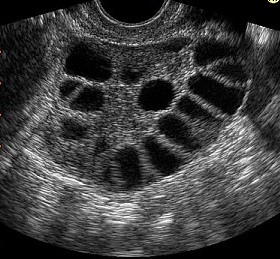
- Antral follicle count through ultrasound of the ovaries
- Semen parameters including sperm count, morphology and motility
- Genetic carrier screening
- Uterine cavity imaging
Patients receive a personalized IVF cycle overview outlining medications, expected timelines, and monitoring appointments.
Step 2: Ovarian Stimulation and Monitoring
Once the cycle begins, patients start hormone stimulation to encourage the growth of multiple follicles. Understanding the ovarian stimulation timeline is one of the most common concerns among first time patients.
This stage typically lasts 10 to 12 days and includes:
- Daily injectable medications to stimulate follicle growth
- Follicle monitoring ultrasound assessments
- Blood tests to measure estradiol levels
- Adjustments to medication based on each patient’s response
This phase represents the most dynamic portion of the IVF timeline. FISD ensures each step and concept is explained in reassuring everyday language at every appointment.
Step 3: Trigger Shot and Egg Retrieval Procedure
When follicles reach optimal size, a trigger injection is administered to prepare the eggs for retrieval. Egg retrieval is a short outpatient procedure performed under light anesthesia.
This is where the egg retrieval process breakdown becomes crucial. The procedure generally lasts 20 to 30 minutes, with patients returning home the same day.
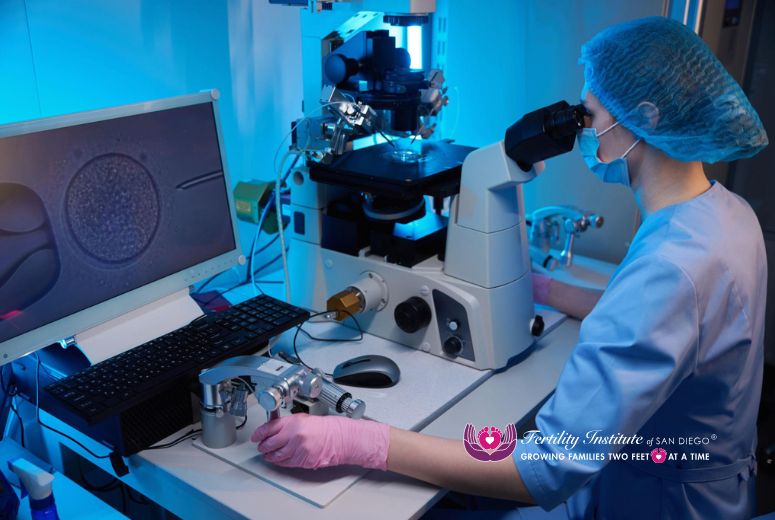
During retrieval, the embryology team immediately examines the eggs to determine maturity and suitability for fertilization. Precise laboratory handling at this step is essential for embryo development days ahead.
Step 4: Fertilization and Embryo Development
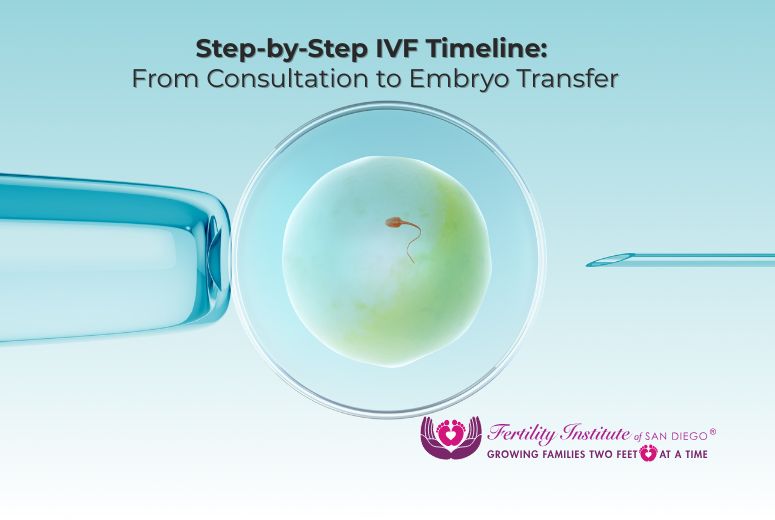
After retrieval, the next chapter of the IVF timeline occurs within the laboratory. Fertilization may be performed conventionally or through ICSI, depending on the couple’s needs.
Embryos develop over the next five to six days, following predictable morphological patterns. These stages include:
- Day 1: Fertilization confirmation
- Day 3: Cleavage stage embryo formation
- Day 5 to 6: Blastocyst development and embryo grading
Dr. Hosseinzadeh highlights the importance of transparency here: “Patients deserve to understand exactly how their embryos are progressing. Each developmental milestone tells us something meaningful about their reproductive potential.”
Optional Step: PGT Testing Timeline for Embryos
Some couples opt for PGT to analyze genetic and chromosomal normalcy. This step can be valuable for patients seeking additional clarity before the embryo transfer.
The PGT process does not impact the timing of your IVF cycle. It gives us genetic information about the embryos allowing the selection of genetically normal embryos which can significantly impact implantation success and overall IVF outcomes.
Note from Dr. H: It would be good to talk about the Embryoscope in step 4.
Step 5: Preparing for Embryo Transfer
The embryo transfer timeline focuses on preparing the uterine lining for optimal receptivity. This involves medication management, estradiol monitoring, and progesterone support.
Key components include:
- Endometrial thickness checks via ultrasound
- Final progesterone scheduling
- Stress minimization, hydration, and lifestyle support
Patients often ask what happens before and after embryo transfer. At FISD, the approach includes clear instructions, personalized planning, and a calm environment to support implantation.
The transfer itself is a quick, comfortable procedure without anesthesia. A thin catheter guides the embryo into the uterus under ultrasound visualization.
When to Expect Results
Ten to twelve days after the embryo transfer, patients complete a pregnancy test. Many find this waiting period emotionally challenging, which is why FISD emphasizes continuous support, steady communication, and guidance.
Who Benefits Most From a Structured IVF Timeline
- First time IVF patients
- Couples seeking clarity on the IVF cycle timeline
- Individuals wanting a highly personalized IVF treatment in San Diego
- Patients wanting an integrated fertility clinic San Diego experience where both testing and procedures occur in one clinic
A predictable timeline reduces stress, improves communication, and allows couples to plan work schedules, travel, and supportive lifestyle adjustments.
FAQs
Final Guidance
A structured IVF process step by step provides clarity and confidence during a deeply personal journey. With individualized care, comprehensive diagnostics, and expert embryology support, IVF treatment in San Diego becomes a collaborative pathway toward family building. If you are ready to start your fertility journey, please book a complimentary virtual consultation with Dr. Hosseinzadeh to go over fertility options or any other reproductive healthcare questions, click here.
Sources
American Society for Reproductive Medicine
CDC Fertility Statistics
Society for Assisted Reproductive Technology