


September is Sexual Health Month, but conversations about sexual health and fertility should extend far beyond preventing infections or maintaining a satisfying sex life.
For people trying to conceive, sexual health can intersect with reproductive health in ways that are surprisingly complex. Pain during intercourse, changes in desire, erectile or ejaculation difficulties, previous sexually transmitted infections, pelvic pain and hormonal changes can sometimes provide important clues about fertility problems.
Yet these are also symptoms many people find difficult to mention, even to a physician.
At the Fertility Institute of San Diego, Dr. Minoos Hosseinzadeh provides individualized reproductive care in a private practice setting, allowing patients to discuss concerns that may feel uncomfortable, personal or easily dismissed.
“Fertility is not isolated from sexual health. Sometimes a symptom a patient considers embarrassing or unrelated can give us valuable information about their broader reproductive health.”
Dr. Minoos Hosseinzadeh
SEXUAL HEALTH CAN PROVIDE CLUES ABOUT FERTILITY
Painful intercourse • Low desire • Erectile difficulties • Ejaculation problems • Pelvic pain • Previous STIs • Irregular ovulation
How Sexual Health Affects Fertility
Sexual dysfunction does not automatically mean someone is infertile. Likewise, a satisfying and apparently healthy sex life does not guarantee normal fertility.
The relationship is more nuanced.
Conception depends on several biological processes working together, including ovulation, ovarian reserve, tubal function, sperm production and transport, fertilization and implantation. Sexual health problems can sometimes interfere directly with intercourse during the fertile window. In other circumstances, they may be manifestations of an underlying reproductive or hormonal condition.
That distinction matters. The objective is not simply to make intercourse more frequent. It is to understand whether something else deserves investigation.
Painful Sex Should Not Simply Be Normalized
Painful intercourse, clinically known as dyspareunia, can have numerous causes. Some have little relationship to fertility, while others can overlap with reproductive disorders.
Endometriosis is an important example. The condition can cause chronic pelvic pain and pain during intercourse and is also associated with infertility. Pelvic inflammatory disease, adhesions, ovarian cysts and other gynecologic conditions can also contribute to painful intercourse.
Vaginal dryness can make intercourse uncomfortable as well. Hormonal changes, medications, inadequate arousal and other factors may contribute.
Persistent pain is therefore not something patients should feel obligated to tolerate simply because they are trying to conceive.
“Pain is information. When intercourse is consistently painful, particularly when it occurs alongside pelvic pain, menstrual changes or difficulty becoming pregnant, it deserves a thoughtful evaluation rather than normalization.”
Dr. Minoos Hosseinzadeh
WHEN PAINFUL SEX MAY WARRANT A CONVERSATION WITH YOUR DOCTOR
- Pain during or after intercourse
- Persistent pelvic pain
- Painful periods
- Abnormal bleeding
- Difficulty conceiving
= Consider reproductive evaluation
Low Libido While Trying to Conceive
Low sexual desire does not itself diagnose infertility.
Desire can fluctuate because of stress, fatigue, relationship dynamics, medications and hormonal factors. Trying to conceive can introduce another layer of psychological pressure.
For some couples, sex gradually changes from intimacy into an obligation dictated by calendars, ovulation tests and fertility apps.
That transformation deserves more attention.
When Trying to Conceive Turns Sex Into a Schedule
“Tonight is the night” may sound innocuous until it happens month after month.
Timed intercourse can create anticipatory pressure, performance anxiety and frustration. The American Society of Reproductive Medicine notes that stress surrounding conception efforts and infertility can exacerbate sexual dysfunction in men.
A cycle can develop:
Fertile window → pressure to perform → sexual difficulty → missed opportunity → greater pressure during the next cycle.
If pregnancy is not occurring, simply intensifying the schedule may not solve the problem. Fertility testing can instead investigate ovulation, ovarian factors, fallopian tubes and sperm health to determine whether a biological barrier is contributing.
Erectile Dysfunction, Ejaculation Problems and Male Fertility
Male sexual health is an integral component of fertility care.
Erectile dysfunction can make intercourse and unassisted conception difficult. Ejaculatory dysfunction can similarly interfere with the delivery of sperm into the reproductive tract.
These problems may be situational, physiological or multifactorial. Erectile dysfunction, for example, can be associated with vascular, neurological, hormonal, medication-related and psychological factors.
Low testosterone requires particular nuance in men trying to conceive. Testosterone and fertility are not synonymous, and externally administered testosterone can suppress sperm production. Men who are concerned about low testosterone while pursuing pregnancy should therefore discuss both hormonal health and fertility goals with an appropriate physician rather than self-treating.
STIs and Fertility: The Consequences Can Appear Years Later
One of the most important connections between sexual health and fertility involves previous sexually transmitted infections.
Chlamydia can be asymptomatic. When untreated, however, it can lead to pelvic inflammatory disease in women. PID may cause scar tissue and damage to the fallopian tubes, increasing the risk of infertility and ectopic pregnancy.
This means an infection from years earlier may become clinically relevant only when someone later encounters difficulty conceiving.
A previous STI does not mean infertility is inevitable. It does mean that infection history is relevant information during a fertility evaluation.
How a Previous Infection Can Affect Fertility
Untreated Chlamydia or Gonorrhea
↓
Pelvic Inflammatory Disease in Some Patients
↓
Inflammation or Tubal Scarring
↓
Potential Difficulty With Egg and Sperm Transport
↓
Possible Increased Risk of Infertility or Ectopic Pregnancy
Hormones, Ovulation and Sexual Health
Irregular periods, changes in libido and difficulty conceiving can sometimes coexist because reproductive and sexual function share endocrine pathways.
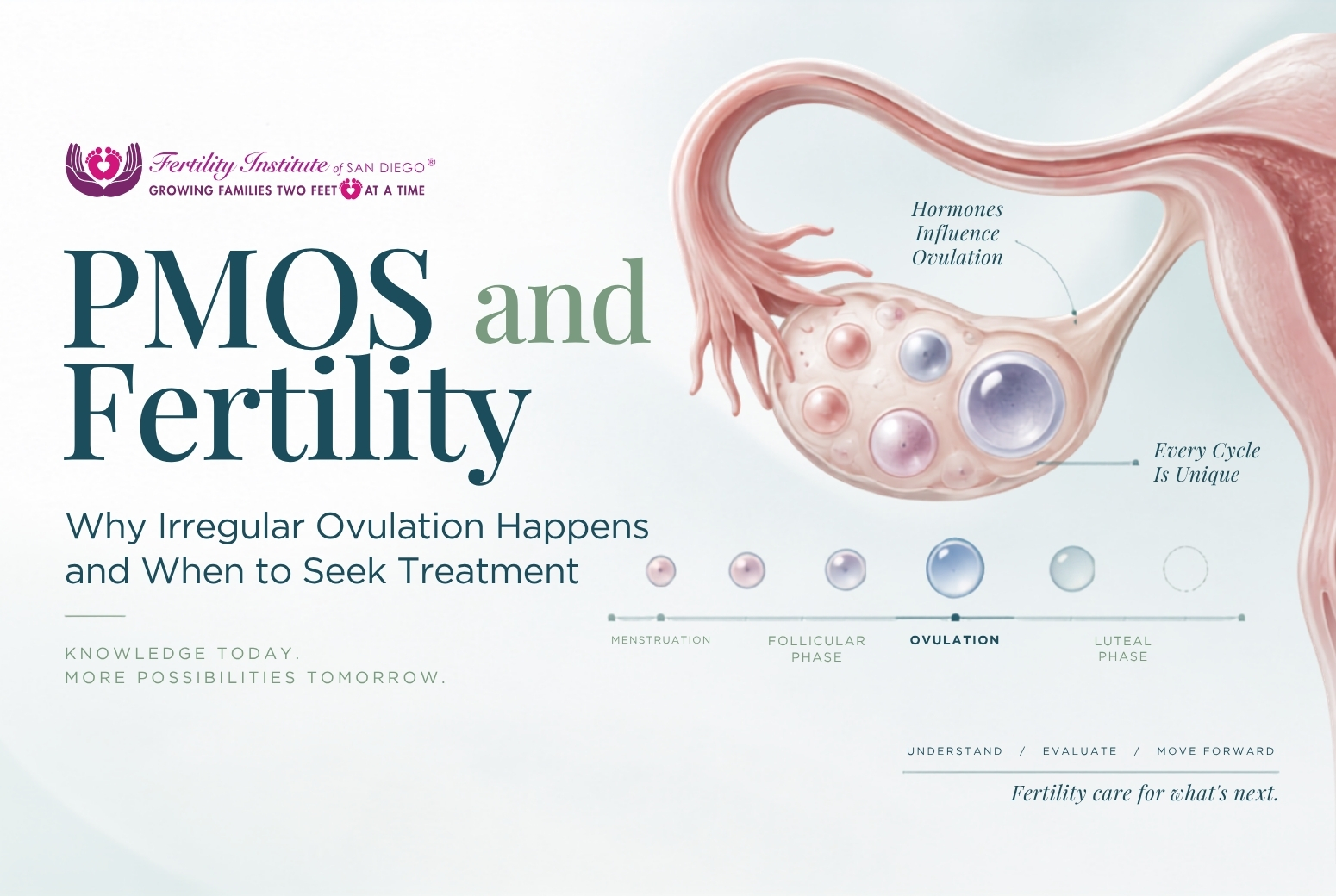
Ovulatory disorders, thyroid abnormalities and other hormonal conditions may influence reproductive function. PMOS, formerly known as PCOS, is also associated with irregular or absent ovulation.
The important point is not to diagnose a fertility condition from libido, menstrual patterns or sexual symptoms alone. Instead, consider the constellation of symptoms.
Irregular cycles plus prolonged difficulty conceiving, for example, may justify investigating ovulation and hormonal health rather than continuing to rely exclusively on timed intercourse.
When Should You See a Fertility Specialist in San Diego?
Consider speaking with a fertility specialist when sexual or reproductive symptoms persist, particularly when they occur alongside difficulty conceiving.
Evaluation may include a detailed medical and reproductive history, assessment of menstrual and ovulatory patterns, ovarian reserve testing, ultrasound, evaluation of the uterine cavity or fallopian tubes when appropriate, and semen analysis for the male partner.
Treatment depends entirely on what is identified. Some patients may benefit from addressing an underlying medical or sexual health condition. Others may require ovulation treatment, IUI, IVF or another individualized fertility pathway.
There is no single treatment algorithm for every couple.
At the Fertility Institute of San Diego in La Jolla, patients receive one-on-one reproductive care with Dr. Hosseinzadeh from evaluation through treatment planning.
Frequently Asked Questions
Can sexual health problems affect fertility?
Yes. Certain sexual health problems can make conception more difficult directly, while others may be associated with underlying hormonal, gynecologic or male reproductive conditions. They do not automatically indicate infertility.
Can painful sex be a sign of a fertility problem?
It can be. Painful intercourse may occur with conditions such as endometriosis, pelvic inflammatory disease or pelvic adhesions, although many other causes are possible.
Can STIs cause infertility years later?
Certain untreated infections, particularly chlamydia and gonorrhea, can lead to pelvic inflammatory disease and tubal damage. The consequences may not become apparent until someone later tries to conceive.
Can erectile dysfunction make it difficult to conceive?
Yes. Erectile dysfunction can interfere with intercourse and therefore with unassisted conception. Persistent ED should be evaluated rather than regarded solely as a fertility problem.
Does low libido mean I am infertile?
No. Low libido has many possible causes and does not diagnose infertility. If it occurs alongside irregular cycles, hormonal symptoms or prolonged difficulty conceiving, further evaluation may be appropriate.
Where can couples get fertility testing in San Diego?
The Fertility Institute of San Diego in La Jolla provides individualized fertility evaluation for women, men and couples experiencing difficulty conceiving.
A Conversation Worth Having
Sexual health and fertility are deeply personal subjects, but silence can sometimes delay answers.
Pain, loss of desire, erectile or ejaculation difficulties, previous infections and changes in reproductive health should not create shame. They are medical conversations worth having.
If something does not feel right, you do not have to wait for it to become a bigger fertility concern. A confidential fertility evaluation can help identify what may be affecting your ability to conceive and what options are appropriate for you.
If you’re ready to start your fertility journey, please book a complimentary virtual consultation with Dr. Hosseinzadeh to go over fertility options or any other reproductive healthcare questions, click here.